 PL
PL
 EN
EN
 DE
DE
 CS
CS
 ES
ES


Women’s barefoot moccasins







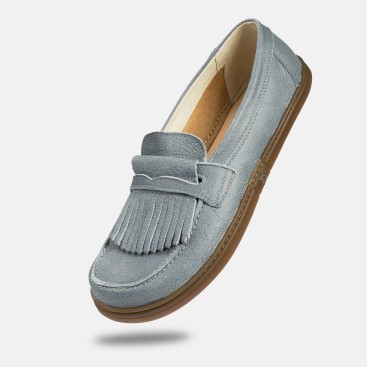
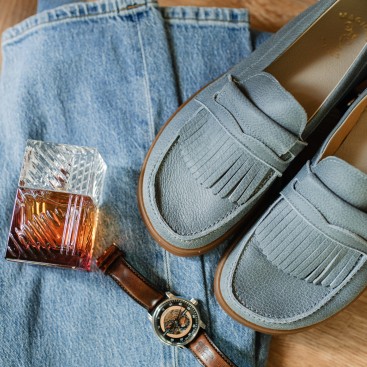
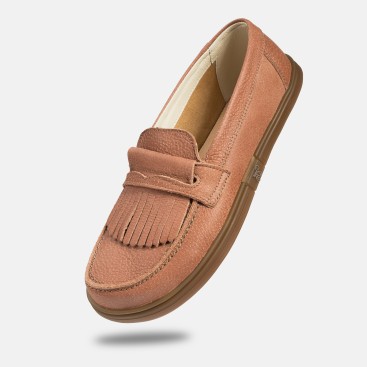
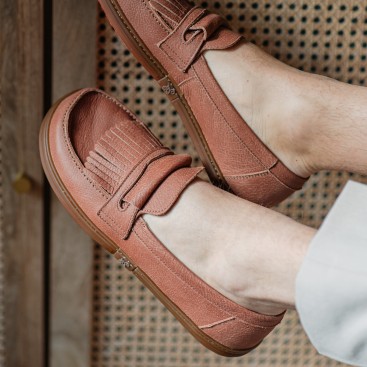
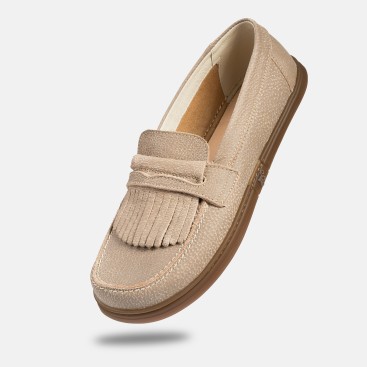
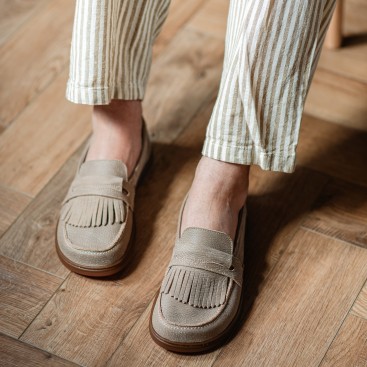
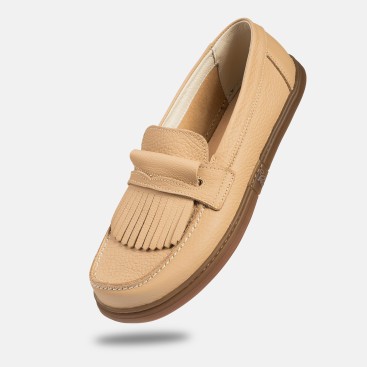
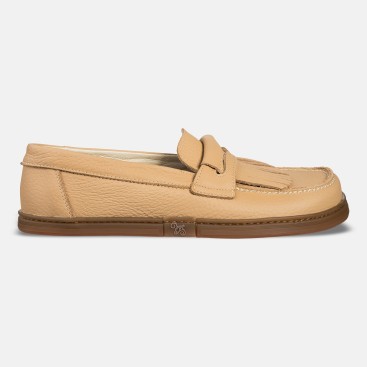
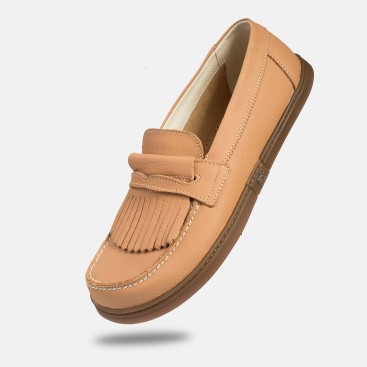

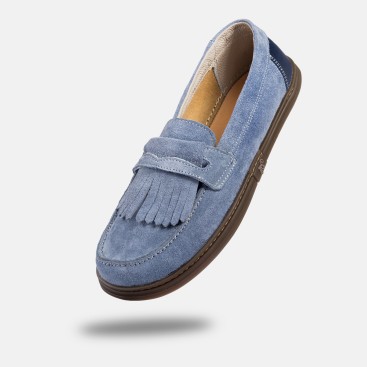
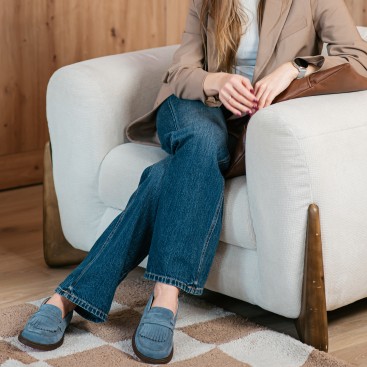
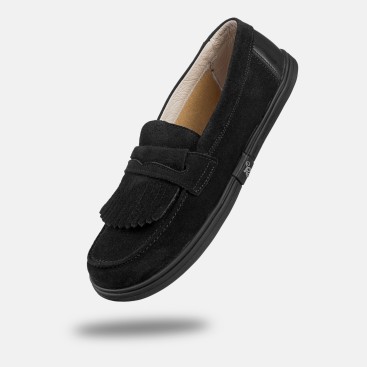
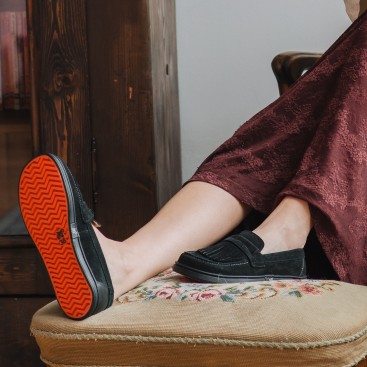
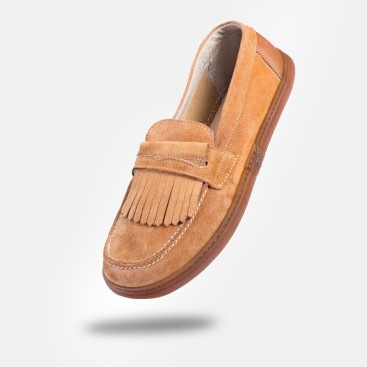
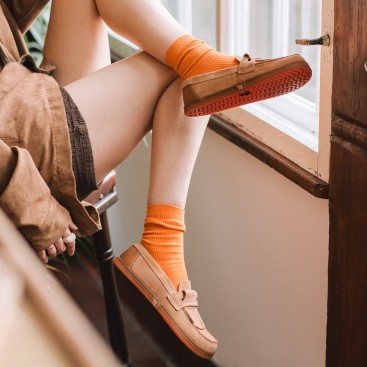
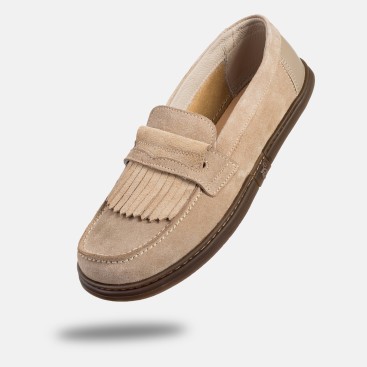
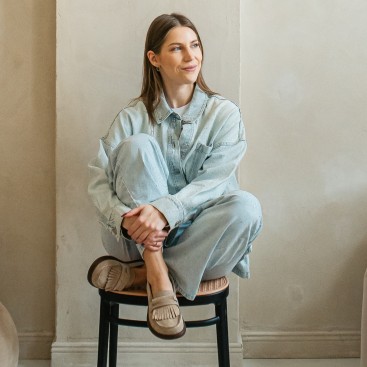
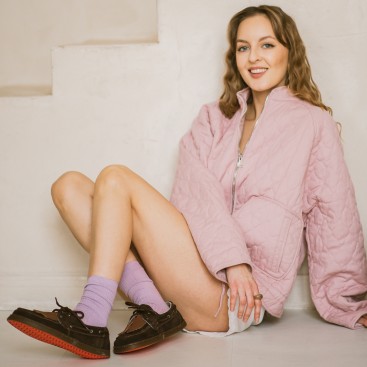

Women's barefoot loafers – elegance that doesn't tire
Loafers have been one of the most versatile models in a woman's wardrobe for years. They work well at work, in meetings, during the daily hustle in the city, and in moments when you want to look more put-together without excessive formality. The problem is that classic loafers often end the same way – they look good, but after a few hours, they start to bother you.
Women's barefoot loafers were created precisely to reverse this pattern. They retain the form you know and love but change what's most important from the foot's perspective. Instead of a rigid construction, you get softness, instead of pressure – space, and instead of restrictions – natural movement.
It's still an elegant shoe. Only finally one that can be worn comfortably all day.
Natural construction that makes the biggest difference
In barefoot loafers, everything starts with how the shoe cooperates with the foot. Classic models often have a narrow front, raised heel, and stiff construction that imposes a specific way of walking. In the barefoot version, this approach is completely changed.
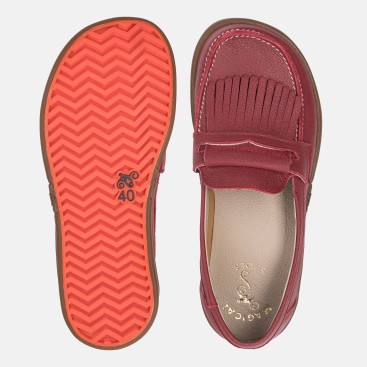
The foot gets space in the toes, allowing it to work freely and without squeezing. The sole is flat, which helps maintain a natural body posture and even weight distribution. The whole remains flexible, so the shoe doesn't block movement but follows it.
In practice, this means you don't have to "break in" the loafers. You don't wait for them to become comfortable. They are comfortable from the start.
Style that stays, comfort that appears
One of the most important things in this category is that the change in construction doesn't take away the character of loafers. You still have an elegant line, clean form, and a model that looks good in many situations. The difference is that this look is no longer accompanied by discomfort.
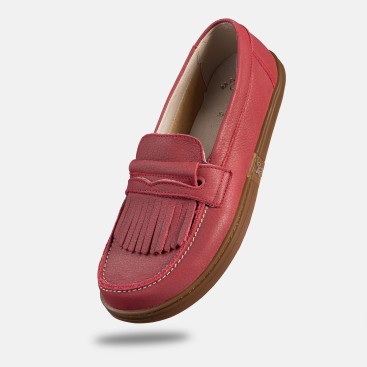
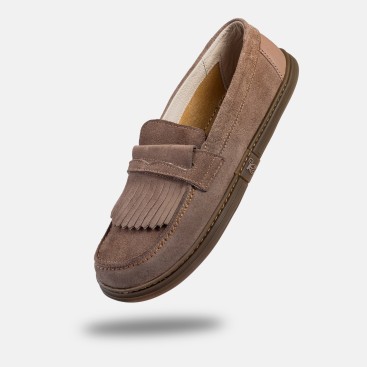
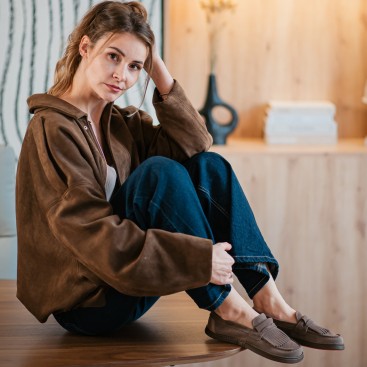
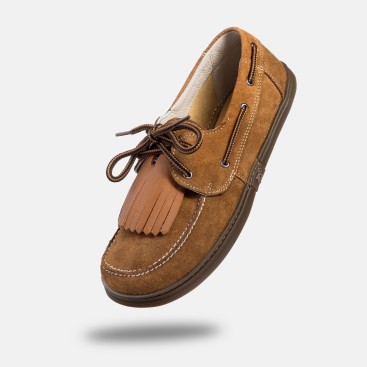
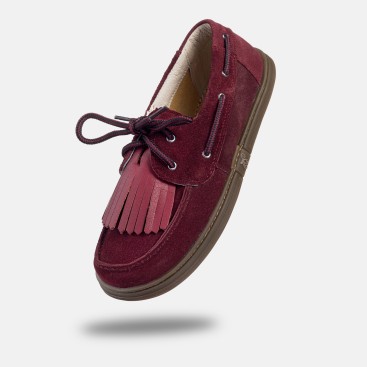
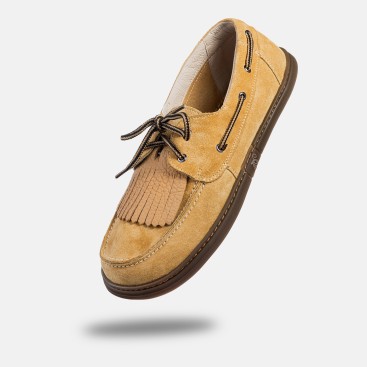
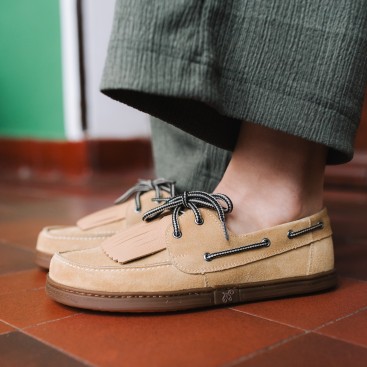
Suede models, such as Pienza, fit well in warmer months and more classic styles. The soft material and subtle details give them lightness, but at the same time, they don't lose their elegant character. It's a good choice for work, meetings, and anywhere you want to look neat but without excessive formality.
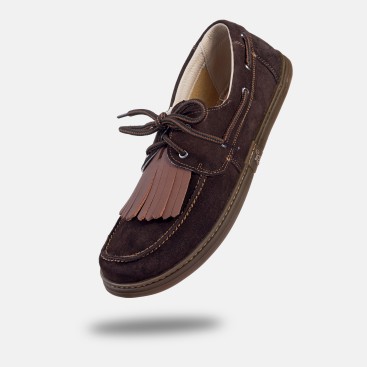
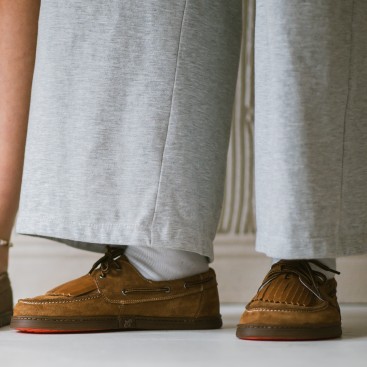
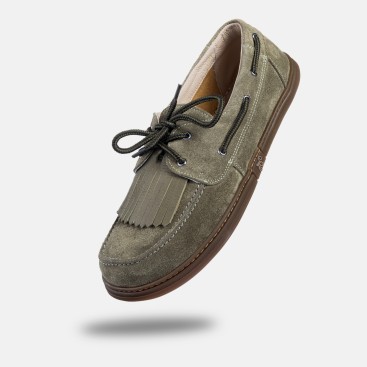
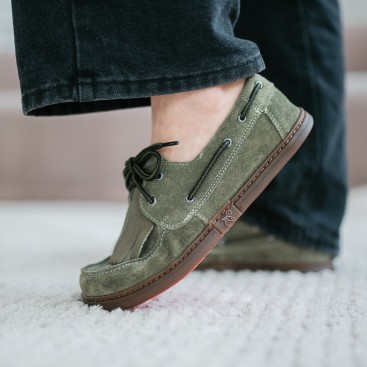
Galeon leans towards more casual elegance. Inspired by classic boat shoes, it fits well in everyday styles and easily matches different clothes. It's a model that works when the day doesn't have one specific scenario.
Meanwhile, Cameron is the most classic version of a barefoot loafer. Simple form, leather, and timeless look make it a model that can be treated as a staple of the everyday wardrobe.
Each of them looks familiar. Each works completely differently than traditional counterparts.
Fit that stops being a problem
Slip-on shoes have always had one weak point. It was hard to fit them well to the foot. If they were too tight, they caused discomfort. If too loose, they lost stability.
In barefoot loafers, this problem is solved structurally. Soft materials fit the foot better, and additional solutions, such as a removable insole, allow you to adjust the shoe to the arch height. For a standard foot, the insole stabilizes the fit, and for a higher arch, it can be removed to gain more space.
It's a simple mechanism that in practice eliminates most fit problems.
Loafers that work in the daily rhythm
Women's barefoot loafers work best where the shoe simply needs to perform for many hours. At work, during meetings, while moving around the city, or during trips when you don't want to bring several pairs of shoes.
Their biggest advantage is that they don't require your constant attention. You don't think about them while walking, you don't adjust them every moment, and you don't feel the need to take them off at the first opportunity.
These are shoes that fit into everyday life without unnecessary complications.
How to choose women's barefoot loafers
Choosing barefoot loafers is best started with how you plan to wear them. If you want a more elegant model for work and meetings, classic styles made of leather or suede, which are easy to combine with a simple, organized style, work better.
If you're looking for something more everyday, it's worth paying attention to models with a lighter character that fit well in less formal situations. In this category, it's important that the shoe is versatile and fits different day scenarios.
Fit is also very important. Loafers should hold the foot well but not squeeze it. Space in the toes is important, but equally important is the stable placement of the midfoot and heel. If the shoe doesn't bother you while walking and doesn't draw attention to itself, it's usually a sign that the choice is right.
Who are women's barefoot loafers for
This is a good solution for women who want to combine an elegant look with real comfort. They are especially suitable for those who spend a lot of time on their feet and don't want to come home with tired feet.
It's also a sensible choice for those who previously had problems with classic loafers and were looking for something that wouldn't cause pressure or discomfort. The barefoot construction offers more freedom, which in many cases solves these problems.
They will also be suitable for those who are gradually transitioning to more natural footwear and are looking for a model that doesn't look sporty but still provides similar sensations while walking.
When barefoot loafers may not be the best choice
This is not a model for every situation. In very harsh weather conditions, with heavy rain or low temperatures, more enclosed shoes work better. Barefoot loafers are primarily a solution for warmer months and everyday use in moderate conditions.
They also won't be the best choice where you need very specialized footwear, for example, for intensive trekking or working in a demanding environment. These are shoes for everyday life, not for every possible situation.
Barefoot loafers vs. classic loafers
Classic loafers focus mainly on appearance and a specific form. They are often narrower, stiffer, and less flexible, which can affect comfort during prolonged wear.
Barefoot loafers approach this differently. They retain aesthetics but change the construction to be more foot-friendly. As a result, the difference is not always visible at first glance, but it's very noticeable while walking.
It's this difference that makes many people, after switching, not want to return to classic models.
Where to buy good women's barefoot loafers
It's best to choose models that are clearly described in terms of construction, materials, and fit. In this category, it's not only about appearance but also how the shoe works with the foot in practice.
It's worth paying attention to the quality of workmanship, the materials used, and the place of production. Well-designed barefoot loafers are not just a matter of aesthetics but primarily functionality that should work for many seasons.
FAQ – women's barefoot loafers
What are women's barefoot loafers?
Women's barefoot loafers are shoes inspired by the classic loafer style but designed so that the foot can work more naturally than in standard footwear. This usually means a flat sole without a raised heel, more space in the toes, and a more flexible construction. As a result, barefoot loafers don't enforce such a rigid foot position as many traditional models and are better suited for everyday walking.
In practice, for the user, this usually means greater comfort, less feeling of tightness in the forefoot, and a more natural sensation during movement. They are still loafers, so they retain an elegant, orderly character, but their construction is much more foot-friendly than in classic counterparts.
How do barefoot loafers differ from classic women's loafers?
The most important difference concerns the construction and how the shoe cooperates with the foot. Classic women's loafers often have a narrower front, a stiffer sole, and less space in the toes. Many models also have a slightly raised heel or a construction that looks elegant from the outside but becomes noticeably tiring with prolonged wear.
Barefoot loafers are usually wider at the front, more flexible, and flat. This means they don't squeeze the toes as much and don't restrict foot movement to the same extent. For many women, the difference becomes apparent only after a few hours of wearing, because that's when it becomes clear whether the shoe is really comfortable or just looks good at the start of the day.
Are women's barefoot loafers elegant?
Yes, women's barefoot loafers can be elegant and fit well into more orderly styles. The fact that a shoe has a barefoot construction doesn't automatically mean a sporty look. In this category, a lot depends on the line of the shoe, the material, the finish, and the overall character of the model.
Models like Pienza, Galeon, or Cameron show that barefoot loafers can look neat, calm, and feminine. They fit well in styles for work, meetings, city outings, or trips. It's a good option for women who want to maintain a more elegant character of the shoe but don't want to return to very narrow and stiff models.
Are barefoot loafers suitable for work?
In many cases, yes, and this is one of the strongest points of this category. Women's barefoot loafers work very well at work, especially when you want shoes that look neat but at the same time don't tire your feet after a few hours. It's a good choice for the office, meetings, work in a showroom, store, office, or places where you need to look more orderly but not necessarily formal in the classic sense.
In practice, a lot depends on the model. Cameron is more classic and simple, Pienza has a more elegant, soft character, and Galeon leans towards everyday elegance with a touch of casualness. This makes it easier to match a specific style to your work mode and way of dressing.
Are barefoot loafers suitable for all-day wear?
Well-chosen barefoot loafers often work well in such a scenario. This category is especially appreciated by people who wear shoes for many hours and don't want to feel relief only after taking them off at the end of the day. If the construction is soft, well-fitted, and provides the foot with enough space, barefoot loafers can be a comfortable choice for a whole day in the city, work, and daily movement.
Of course, this doesn't mean that every model will be perfect for every foot. A lot depends on fit, arch height, and individual preferences. However, a well-designed barefoot model gives a much greater chance of all-day comfort than a classic loafer with a rigid construction.
Are barefoot loafers good for first barefoot shoes?
Yes, in many cases, they are a very good choice for a start, especially if you're looking for an everyday model, not a sporty one. For many people, entering the world of barefoot through an elegant or casual loafer is easier than starting with very technical or highly minimalist models. Such a shoe already offers the basic features of barefoot construction but still remains familiar visually and functionally.
At the start, usually, the best choices are soft, lightweight, and versatile models. If you previously wore mainly classic loafers, ballet flats, or oxfords, switching to barefoot loafers can be a natural step. It allows you to get used to more space in the toes and a more natural foot position without changing your entire style of dressing.
Are barefoot loafers suitable for wide feet?
In many cases, yes, because the greater amount of space in the toes is one of the most important features of this category. Classic loafers often fail here. They can be narrow at the front and quickly start to squeeze, especially with prolonged wear or when the foot works slightly during the day.
Barefoot loafers usually handle this problem better because their construction assumes a more anatomical shape. This doesn't mean that every model will be perfect for every wide foot, but generally, the chance for a good fit is significantly higher here than with classic styles. It's always worth checking the size chart and the description of a specific model.
Are barefoot loafers suitable for high arches?
It depends on the specific model, but some styles are very practical in this regard. A good example is models with a removable insole, which allow you to adjust the interior of the shoe to the arch height. It's a simple solution, but in slip-on loafers, it makes a big difference.
With a medium arch, the insole can remain in the shoe and improve the fit. With a higher arch, it can be removed to gain more space. This is especially important in loafers because slip-on models can be problematic if the construction doesn't offer any adjustment options.
Can barefoot loafers be worn without socks?
Yes, and many people wear them this way, especially in spring and summer. If the interior of the shoe is made of natural, breathable materials, barefoot loafers can be comfortable even without socks. A leather lining and well-finished interior usually improve user comfort and reduce the risk of chafing.
However, it's worth remembering that a lot depends on the temperature, the length of wear, and individual skin reactions. If you know that your feet sweat more, you might consider thin no-show socks or more regular shoe interior care. The fact of wearing them without socks is not a problem if the model is well-made.
Are women's barefoot loafers suitable for summer?
Yes, it's one of the best categories for warmer months, especially if you're looking for something more enclosed than sandals but lighter and more breathable than full shoes with a rigid construction. Barefoot loafers work well in spring, summer, and warm early autumn days.
Models made of suede or soft leather, with a leather interior and light sole, fit very well in urban use and on trips. It's a good choice for dresses, linen pants, jeans, or simple summer styles when you want something comfortable on your foot but still more orderly than a typical casual shoe.
Are barefoot loafers suitable for spring and autumn?
Yes, especially in transitional periods, it's a very practical category. In spring, they work when it's still too cold for very light footwear, and in autumn when the weather still allows wearing shoes without insulation. This is one of the strengths of barefoot loafers, that they fit well in moments between seasons.
Just remember that they are not shoes for harsh weather conditions. In drier days and moderate temperatures, they work great. In heavy rain or noticeable cold, it's better to opt for more enclosed models.
Are barefoot loafers suitable for rain?
It's better to treat them as shoes for dry weather or at most light, short contacts with moisture. Especially suede models are not the best choice for heavy rain, mud, or wet surfaces all day. They are everyday shoes, but not typically weatherproof.
If you want to extend their durability and better protect the surface, it's worth using an appropriate impregnant suited to the material. This helps limit moisture and dirt absorption but doesn't turn loafers into shoes for tough conditions. Here it's better to exercise common sense, as suede and downpours rarely make a happy match.
Are suede barefoot loafers practical?
Yes, provided you choose them for appropriate use. Suede offers softness, a pleasant appearance, and works well in everyday, warmer conditions. In women's loafers, it often looks natural and fits well in lighter, urban styles.
However, it's important to remember that suede requires a bit more attention than leather. It's better to protect it from heavy rain, clean it regularly, and impregnate it. If you accept this, suede barefoot loafers can be a very successful choice for spring, summer, and dry autumn.
Are leather barefoot loafers good for everyday use?
Yes, and for many people, leather turns out to be the most practical in regular use. It's durable, fits well, easier to care for than suede, and usually withstands the daily city rhythm well. Combined with barefoot construction, this gives a model that can be worn often without feeling that the shoe is too delicate or problematic.
Leather barefoot loafers work particularly well when you're looking for something simple, versatile, and easy to pair with different clothes. It's one of those categories that often become a basic shoe for a larger part of the season.
Do barefoot loafers go well with dresses?
Yes, very well. One of the advantages of this category is that barefoot loafers can be combined not only with pants but also with dresses and more feminine styles. A lot depends on the specific style, material, and color, but generally, this type of footwear fits well in everyday, urban sets.
Models with a softer, calmer character, like Pienza or Galeon, particularly look good with dresses, skirts, or looser spring-summer styles. This way, you don't have to choose between comfort and a more polished look.
Do barefoot loafers go well with elegant pants and office styles?
Yes, it's one of the most natural ways to use this category. Women's barefoot loafers combine very well with elegant pants, chinos, simple suit styles, or linen pants with a more orderly line. If the dress code doesn't require very formal footwear, barefoot loafers often turn out to be a great solution.
They give a softer effect than classic stiff loafers but still maintain an appropriate level of elegance. In practice, they work well where you need to look neat and professional but don't want to suffer in shoes that remind you of themselves more than necessary after just two hours.
Are women's barefoot loafers good for the city?
Yes, it's one of the best categories for urban use. They work well for walking on sidewalks, moving between places, handling daily tasks, and simply the usual rhythm of the day. Their form fits the city, and the barefoot construction makes wearing them more comfortable than many classic models.
If you walk a lot, use public transport, climb stairs, and spend the day outside the home, well-chosen barefoot loafers can prove to be one of the most practical choices.
Are barefoot loafers suitable for trips?
Yes, especially if you're looking for one model that can be taken for several different occasions. It's a good choice for a city break, a holiday trip, a weekend away from home, or a journey where you don't want to bring too many pairs of shoes. Barefoot loafers can work both during the day and for more organized outings in the evening.
Their advantage is that they are lightweight, comfortable, and easy to style. This makes them well-suited for situations where the day's plan is mixed, and you need shoes that are simply useful.
Are barefoot loafers suitable for women who walk a lot?
In many cases, yes, because it's precisely with more walking that the quality of construction becomes most apparent. Classic loafers can look good for the first hour, and then they start to remind you that something went wrong. In barefoot models, greater flexibility, better space in the toes, and more natural foot movement usually make a big difference.
Of course, it doesn't mean that every model will be ideal for very long walks or an intense day on your feet. But as everyday city shoes for women who move around a lot, barefoot loafers often perform much better than classic counterparts.
Can you drive a car in barefoot loafers?
Yes, and for many people, this is a very comfortable type of footwear for driving. The flexible sole and lighter construction allow you to better feel the foot's work, and the lack of a massive form means the shoe doesn't interfere with operating the pedals. In the city and everyday use, it's simply a practical category.
If you're looking for shoes that work well both for walking and driving, barefoot loafers are a very sensible choice.
Can barefoot loafers stretch?
Natural materials, especially leather, slightly adjust to the foot over time. This is normal and usually works in favor of the user because the shoe starts to fit better in areas that are most characteristic for a given foot. However, you shouldn't assume that a too-tight model "will definitely stretch," as this usually ends in unnecessary risk and disappointment.
It's best to choose a size that provides comfort and enough space from the start. Slight material adjustment over time is natural but shouldn't be a rescue plan for a poorly chosen size.
How to choose the size of women's barefoot loafers?
It's best to start by accurately measuring your foot and comparing the result with the size chart of the specific model. It's not worth relying solely on the standard size from other brands because in barefoot loafers, it's not only about length but also the shape of the front, arch height, and how the model fits the foot.