PL
PL
 EN
EN
 DE
DE
 CS
CS
 ES
ES


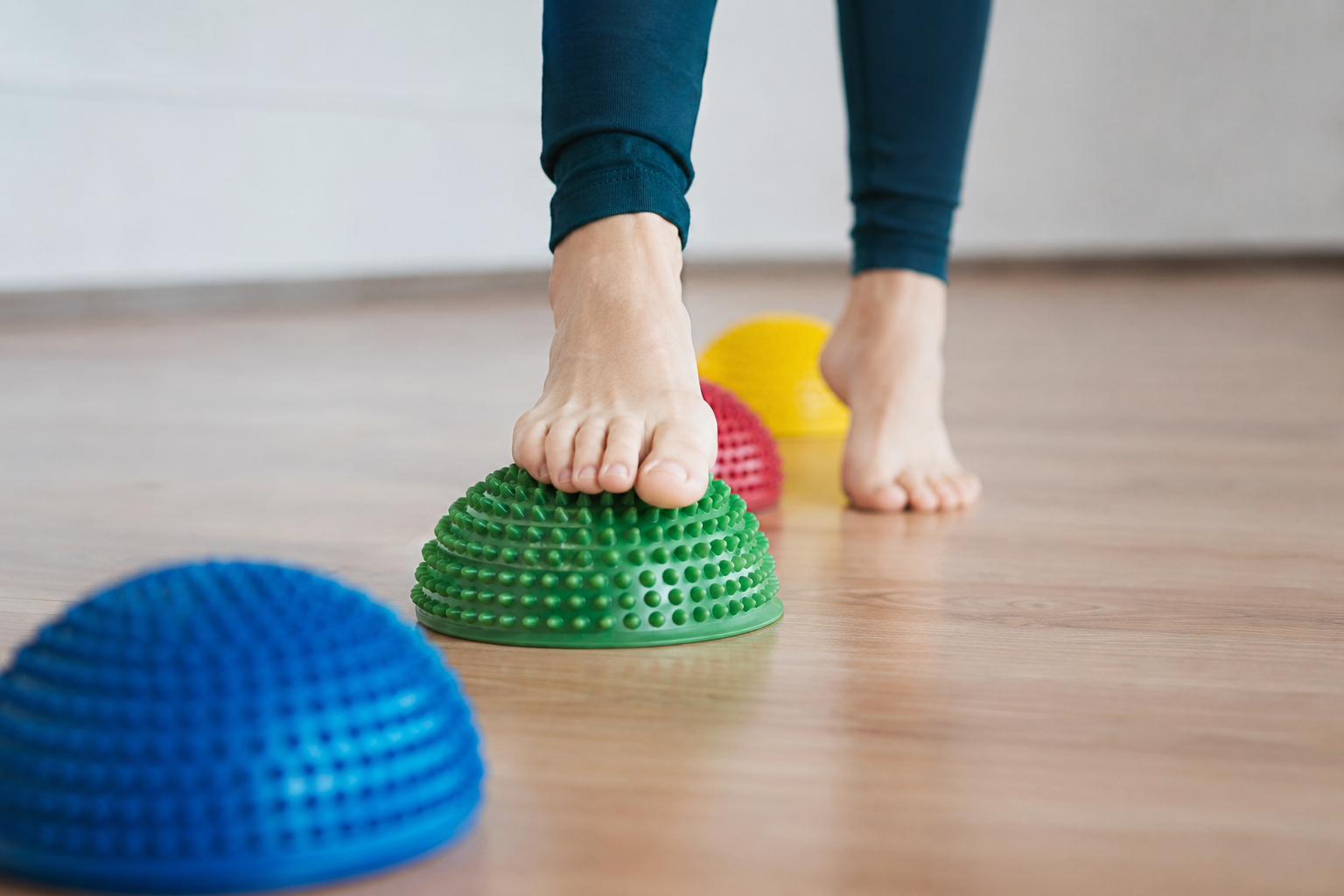
What is proprioception and how does it work?
Proprioception is the ability of the nervous system to detect the position and movement of the body in space. It is not a single organ or one specific mechanism, but a complex network of communication between receptors in the muscles, tendons, and joints and the brain, which continuously interprets these signals.
Throughout the body, there are specialized structures called proprioceptors. They constantly monitor muscle tension, joint position, and changes in movement. Every time you take a step, these receptors send rapid signals to the brain, allowing it to adjust your posture and movements almost instantly. This is what enables you to walk without looking at your feet, maintain your balance, and respond naturally to uneven ground.
That is why proprioception is so closely connected to smooth and coordinated movement. Without it, every step would require conscious control, and even the simplest everyday activities would feel uncertain and unnatural.
Foot proprioception: why does it start with the ground?
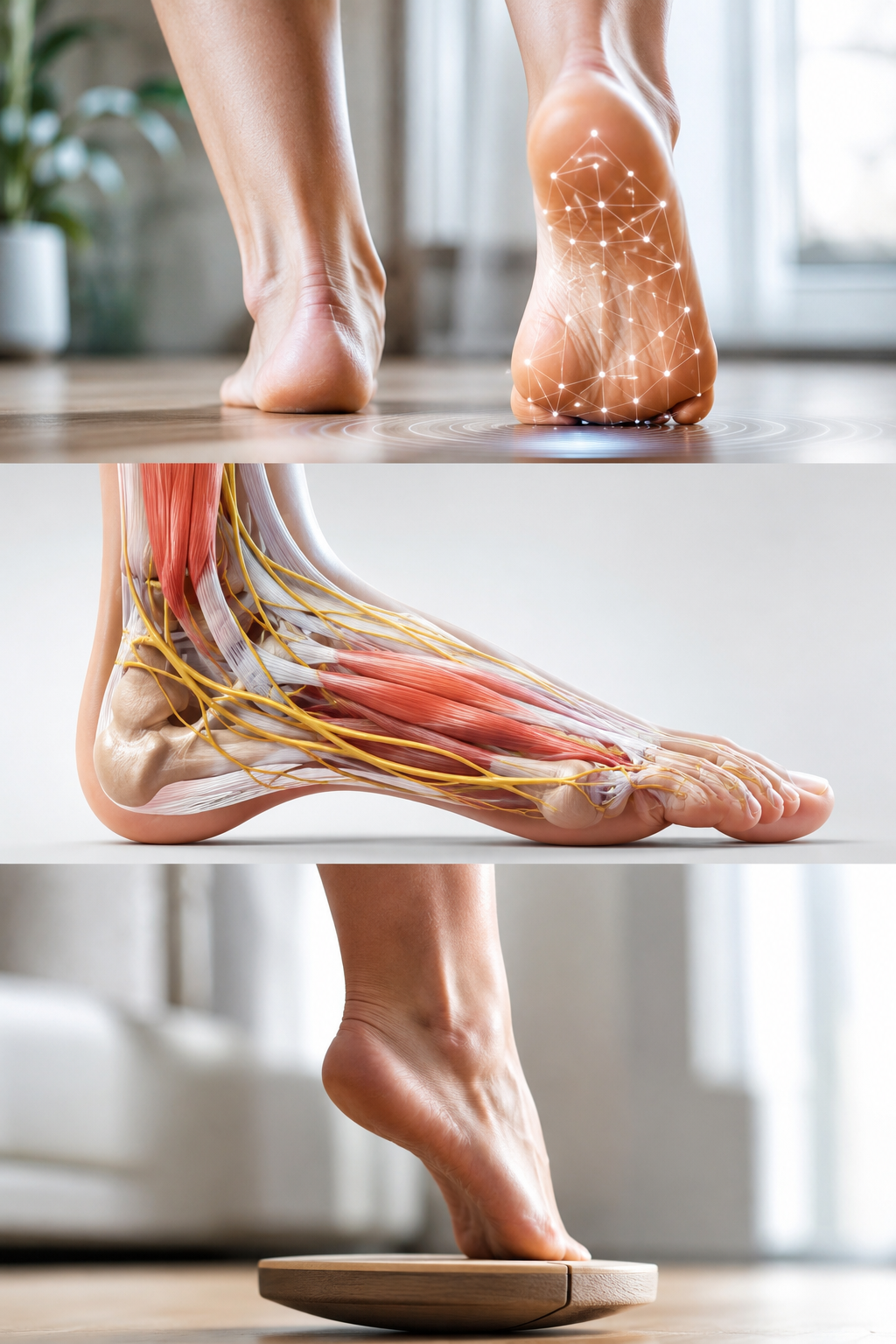
Although proprioceptors are found throughout the body, the feet play a particularly important role in this system. They are the body's first point of contact with the ground and one of its most densely innervated areas. This is where an enormous amount of sensory information is collected, providing the foundation for the body's ongoing responses.
Every step is a tiny analysis of the surface beneath you. The firmness of the ground, its texture, its unevenness, and its stability are all instantly communicated to the nervous system. Based on this information, the body determines how to position the ankle, knee, hip, and spine. In many ways, the feet guide the rest of the body, even though this process happens entirely outside of conscious awareness.
When this system functions well, movement is efficient, coordinated, and safe. However, when foot proprioception is impaired, the entire body begins to compensate for the missing information. This can lead to excessive muscle tension, increased strain, and altered movement patterns that may eventually contribute to pain.
.jpg)