- Women's
- Men's
- Kids
- Accessories
- Sale
- Blog
- Discover more
- Sign in / Register
.jpg)
Why is it worth switching to natural running?
Why is it worth switching to natural running? Natural running is a return to the roots. A return to barefoot running, meaning running without shoes or in minimalist shoes without cushioning. This technique is gaining a growing number of enthusiasts. Not without reason. Natural running workouts bring many benefits. In this article, you will learn why it’s worth running this way, how to do it, and what features good natural running shoes should have.
What is natural running?
The technique of natural running aims to maximize the use of foot biomechanics and the entire body. This is possible if you abandon traditional running shoes with cushioning systems and start running barefoot or in minimalist shoes. When you run barefoot or in barefoot shoes, you activate the natural cushioning mechanism and engage all 33 joints in each of your feet. Compared to other running techniques, natural running allows for much more efficient work of the arch of the foot, Achilles tendon, calf muscles, glutes, and thighs.

What is midfoot running?
In natural running, the most important thing is the optimal landing of the feet on the ground. Since you run barefoot or in minimalist shoes, landing on the heel can quickly lead to injuries. In natural running, you land on the midfoot, which, under the body’s weight, slightly expands. Then, the foot quickly and freely rolls forward to the toes, which helps to efficiently push off the ground. Switching to this technique requires applying a few important principles, which we discuss in the guide: How to start running naturally in a healthy way?
How to properly train midfoot running?
If you want to check if you’re training natural running correctly, pay attention to the following aspects:
- whether you land on the midfoot during your run,
- whether your posture is slightly leaned forward (through a flexed ankle joint),
- whether your legs and arms are relaxed,
- whether the angle of your elbows does not exceed 90 degrees,
- whether your spine is straight,
- whether you’re looking ahead,
- whether your stride is light and flexible,
- whether your cadence is around 160-180 steps per minute,
- whether you minimize the movement of your arms and hips.
What does natural running provide?
Natural running allows for unrestricted body movement and free foot function. This helps reduce joint strain during the run. When running traditionally, you land on your heel and strike the ground with considerable force. Each impact transfers stress to the ankle, knee, and hip joints, which increases the risk of injury. By running naturally, you can mitigate this risk. Other benefits of minimalist running technique include:
- strengthening natural cushioning,
- strengthening ligaments,
- strengthening tendons, especially the Achilles tendon,
- strengthening leg muscles,
- improved running economy,
- greater movement awareness.
Key features of natural running shoes
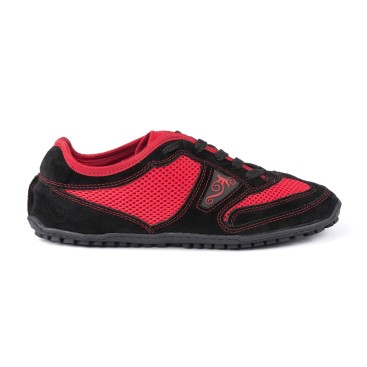
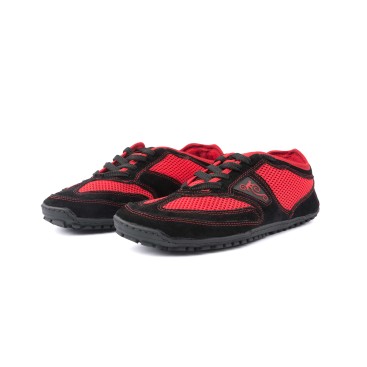
When buying natural running shoes, make sure they are barefoot shoes. They are characterized primarily by a flat, flexible, and thin sole with no cushioning inserts. Another feature is the so-called zero drop, meaning zero incline between the heel and the toes. Thanks to this design, natural running shoes provide foot protection without altering their movement. When choosing barefoot shoes, make sure there’s enough space for your toes. This way, you’ll ensure an effective and dynamic stride, as well as the proper level of comfort.
Barefoot footwear
Perfect for natural running and beyond.