- Women's
- Men's
- Kids
- Accessories
- Sale
- Blog
- Discover more
- Sign in / Register

Can children train for running?
For a child, running is just as important and natural an element of movement as walking. From the earliest years of life, a small child full of boundless energy loves movement, needs it, and moreover, starts engaging in physical activity on their own, without any encouragement. It is crucial to allow them to explore the world of their own desires and abilities. Should children, therefore, train for running?
When should you send your child to running training?
To answer this question, we need to look at the stages of children's physical development. Children aged 3-4 years do not yet have sufficiently sharp vision, struggle with determining distances and the size of obstacles, and have difficulty concentrating. Their motor skills are not developed enough to successfully mimic adult movements. At this age, children should not be trained in sports in any purposeful way.
Five- and six-year-olds can run, but focusing on one activity for a longer period of time is a real struggle for them. Don’t take them on long walks, but rather let them run around in the yard. Let running be part of their play. Running training should not be started yet.
Children aged 8-12 years already have a sufficiently developed nervous system to perform more precise movements. They also have a greater ability to concentrate. However, they should not be directed toward a specific sport unless they show an interest in it.
During adolescence (13-14 years), children often lose motivation to engage in sports. The skeletal system is not yet sufficiently mineralized, and the muscles are not ready for significant effort. During this period, children can train, but endurance or overly strenuous training is not recommended. However, this is the right time for young people to start their serious running adventure under the guidance of qualified trainers.

Running Training for Children – What to Watch Out For?
Before a child starts running, especially over longer distances, it is important to consult an orthopedic specialist to examine the musculoskeletal system and rule out flat feet. Flat feet can progress when engaging in long-distance running.
It is also important to maintain balance and moderation, as excessive strain on muscles and joints can cause pain or even periostitis.
Do not encourage children to compete in races. This is when injuries or dangerous falls are most likely to happen.
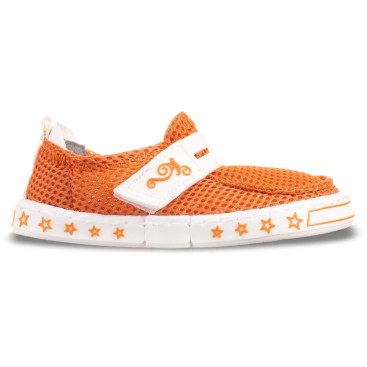
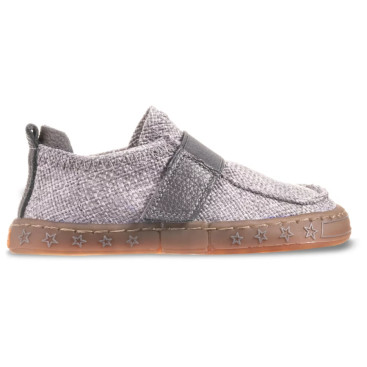
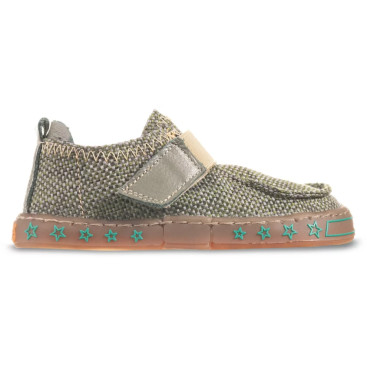
In both adult and children’s training, an important aspect is choosing the right footwear. The shoes should be comfortable and well-fitted. It’s important that their sole is soft and flexible, and the shoes themselves should be breathable, allowing the feet to breathe. Finding the right pair is not always easy, so it might be a good idea to start with the Explorer shoes.
How to Encourage a Child to Run?
The answer to this question can only be one: don’t encourage. Encouragement can easily turn into persuasion, and from there it’s a short step to forcing. Children should primarily be taught that they have a choice, and we should show them different available options. Trying to impose our passions and interests on children often ends in failure. This is related to our emotional attachment to a given sport or art. We want so much for our children to love them too that we don’t even notice when we start applying pressure. It never ends well.
If we want our child to run more, we should show them different games that require this kind of movement. Arrange team games for children. Give the child time to fully develop physically, emotionally, and mentally so that they can grow into running or any other discipline that they enjoy.
Check out the new arrivals
In our store, you'll find shoes for children not just for running.